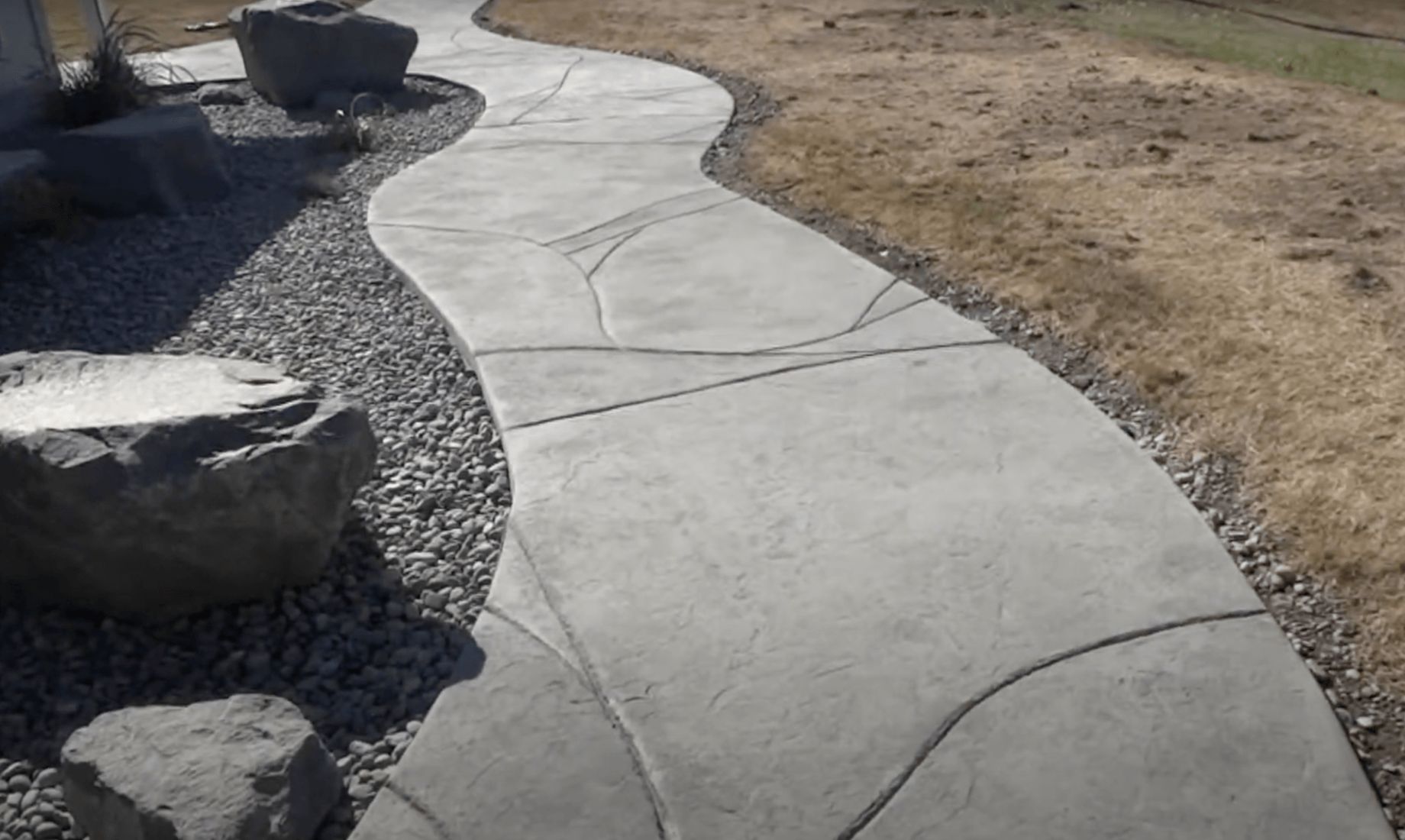
Next, you need to determine the form and size of the concrete pour. Because it is easier to work on level ground, it also reduces the amount work required to make a subbase flat and a concrete pour.
Once you have determined the location, mark the area where concrete will be poured. String and stakes can be used to lay a slab. A stake is placed at each corner. Flags can be confusing if they were used to mark wires, gas lines and sewer lines. Specific colored flags are used for different functions. To ensure that a rectangle shape is achieved, measure the diagonals.
Most situations require that some soil be removed in order to make concrete. If you want the concrete patio or driveway level with the surrounding ground, then remove enough soil to make sure the subbase of gravel is 4-8 inches deep and the concrete slab on the top is 4 inches. The depth of concrete and subbase may vary depending on the project.
Take out any sticks, twigs or odd-sized stones. This will help to eliminate air pockets and uneven concrete surfaces. To ensure that the ground is flat, use a 48-72-inch-long level. Adjust the grading by moving the soil with a shovel, and then test the level again.
By using a hand tamper to compress the subgrade (the soil or earth that lies beneath a layer of gravel), you can compact it. The flat-bottomed plate has a broom-length, upright handle that allows you to add weight by pressing down on it or standing on top of it. To prevent concrete cracking, apply the hand tamper evenly to the entire area.