cost of concrete driveway

driveway replacement cost


You've got the necessary concrete mix and you have chosen the perfect day to pour. Follow these step-by–step instructions to successfully pour concrete.
Making sure that the concrete pouring site is safe and legal is the first step of any concrete project. This includes contacting the local department of building to find out more about permits and setting backs. Also, it involves calling the local excavating number to determine the locations for pipes and wires.
Concrete pouring cannot be stopped or re-started without serious consequences. This is why it's so important to prepare your work area and have all the necessary tools and materials ready before you can start a DIY concrete job. Wearing safety glasses and gloves protects your skin from the possible chemical burns of wet concrete.
The next step in the process is to determine the size and shape for the concrete pour. It is easier to work from a level surface, since it reduces site work and makes it easier to pour concrete.


Open-grade materials are less expensive and more water-draining, but finer grade stones or gravels can be compacted better and provide more stability. The subbase can be compacted using a hand tamper. Lay the sheets first if you're adding wire mesh to reinforce concrete.
You will need to wear safety glasses, gloves, and work gloves when mixing concrete. A concrete mixer is available for rent at $100 per person, although a wheelbarrow along with a shovel and elbow grease will be sufficient for small jobs. Two wheelbarrows may be helpful if you have help.
Before you start mixing the concrete mix with the water, make sure it is piping hot. If your area is prone to hard water, filtered water may be a better choice. It will help prevent concrete from turning a yellowish hue due to the efflorescence blooming. Concrete can take longer to cure and may cause a weaker result in large jobs. Call us to get more details about mixing concrete including how much water and the correct consistency.
For concrete mix mixing, be sure to keep a 5-gallon bucket with water or a gardenhose nearby. This will help prevent concrete from setting.
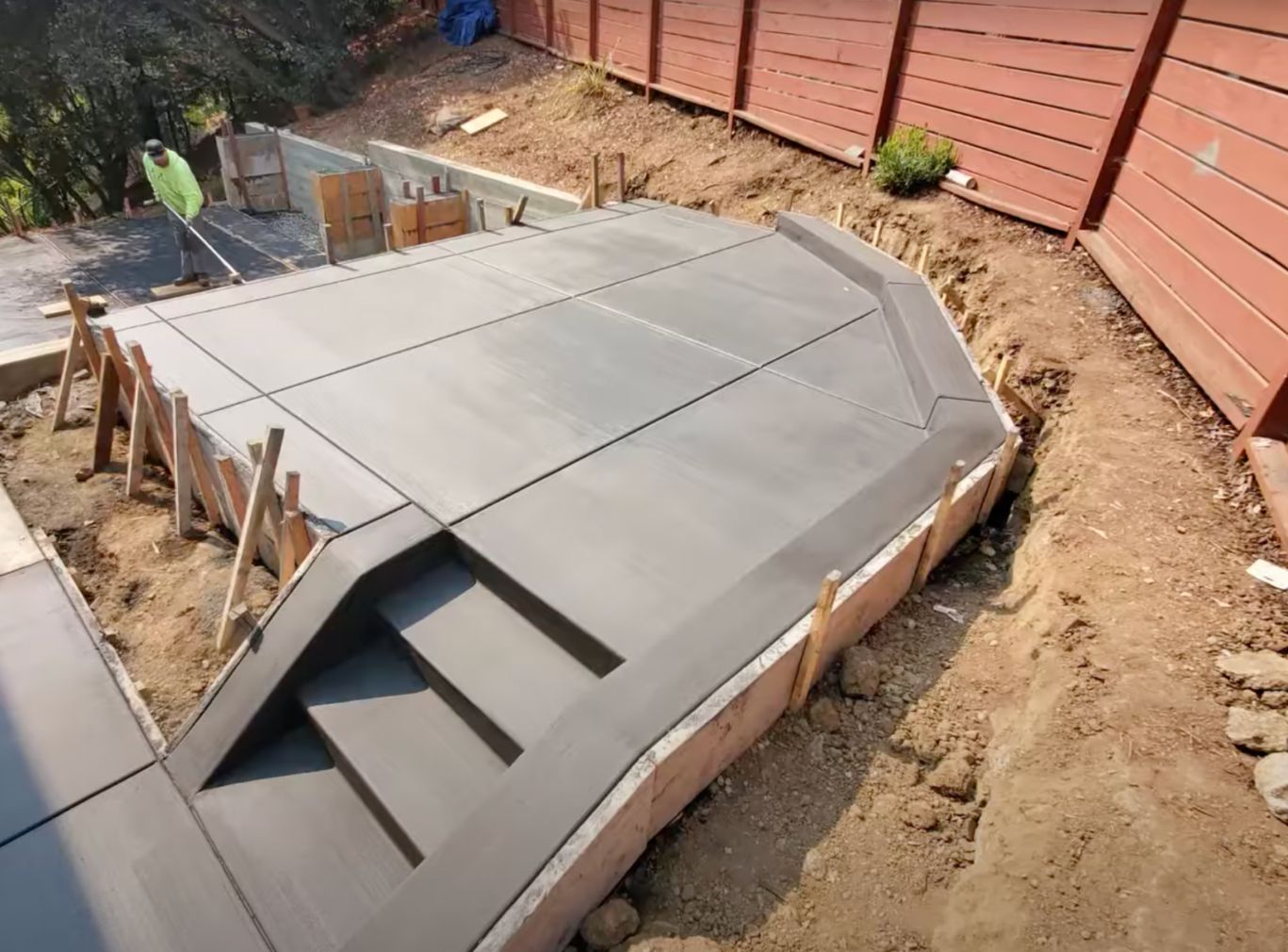
Concrete pouring can now begin once the concrete is mixed. To pour concrete, turn your wheelbarrow full of mixed concrete onto the form. If you have enlisted your friends, get them to help and quickly scrape the concrete into place.

cost of pouring concrete driveway

cost of pouring concrete driveway


Rest the screedboard’s narrow side on top of each of the perimeter boards. You can smoothen and levelize the concrete by hand-dragging the screedboard using a backwards sawing motion. Keep repeating this step until the concrete has a smooth finish.
Keep the wood float at an angle when pushing it away. If you want to bring the float closer to you, make sure the side facing toward you is slightly raised. This will help you avoid drag marks. Next, make sweeping semicircular motions with the magnesium handfloat.
The concrete should be grooved every 4 to 6 ft in width. This will allow concrete's temperature to change, and prevent surface cracks.

tulsa concrete


Concrete work (especially pouring) can be extremely time-sensitive. Concrete workers must be focused as they work. The material may harden and make subsequent processing challenging.
Concrete workers frequently have to work overtime as the material requires certain processing methods (i.e. Finishing cannot be paused in the evening and resumed at dawn.
Concrete masonry can be physically taxing work. Many professionals have to spend a lot of time on their feet. Extreme heat. They may also need a lot of bending (i.e. Hand tools are used to finish concrete. This can cause strain on the knees.
Concrete workers often learn their craft while on the site. This learning environment is very different from one that you would find in a classroom. It requires a new approach to learning. You must be open about your limitations and not let them get in the way of the project.

tulsa concrete
driveway concrete cost

driveway concrete cost


You can protect the concrete's longevity after it has cured by sealing it with a concrete primer recommended by your concrete manufacturer. This concrete primer is suitable for concrete types, climate, and project details. You should wait for the sealant to dry before you walk on it. Then, wait 2 to 3 days before you drive on your newly sealed driveway.
Concrete will look great for many years if it is regularly cleaned with soapy warm water. You can also protect concrete by sealing it every five years.
You might have more questions about pouring concrete. This is often misunderstoodly called pouring cement. These are the top questions regarding pouring concrete. If you are unable to find the answer to the question below, contact the manufacturer to obtain additional information.
Concrete can be placed directly on dirt. Concrete may crack in colder areas. Use a subbase made of gravel to protect concrete's structural integrity.
Costs for concrete slabs start at $6 per square feet. The additional cost of gravel for subbase, formwork and concrete finishing tools as well as other supplies is not included. It may cost around $800 to pour 12x12 inches of concrete slab depending on the location and thickness.
Quikrete bags of concrete mix recommend mixing an 80-pound bag of concrete with 3 quarts of water. To start, pour 2 quarts of the mix into the container. Then add the rest of the water as you need it. The type of concrete mix and the climate will also affect the amount of water needed to mix concrete.
You can add more water if the mix is too dry. It's possible to adjust the mix by adding more dry material. Mixed concrete should look like cookie batter.

concrete company tulsa


Concrete contractors must identify the form, size, color, finish, depth, and shape of concrete being used in concrete construction. Before the project begins, it is essential to determine the priorities of each option. This will allow you to choose the best options for your project.
Site preparation involves the backfilling and excavating of sites. Site preparation allows contractors to ensure that no rocks, trees and other vegetation are left behind. The ground must be compacted, graded, leveled, and leveled. This will ensure that it can support the building's demands for years in all weather conditions, mild and extreme. When the ground is not prepared correctly to allow and withstand moisture and dirt settling, it can cause concrete problems and compromise the integrity and safety of those who will be occupying the building.
Concrete's versatility to accept many forms and designs is one its greatest strengths. Concrete contractors have several responsibilities. Modern formwork is a subject of many innovations. Prefabrication makes formwork much easier, cheaper and more efficient. For the creation of the customized shapes and designs the client desires, formwork is used to create molds for concrete placement. Based on the use of concrete, shapes and forms can also be created using metal, plastic, or wood.
Placing concrete is another aspect of the job of a concrete contractor. Concrete is poured into forms. The team uses rakes to move the concrete through these forms.
After concrete is poured, it must be consolidated and compacted in order to prevent air pockets. A broom finish can be applied to the concrete. This is done by pulling a special bristle brush over the surface in order to achieve a rough texture. Finishing may also include adding decorative elements, such as design, dye, or any other details to concrete.
Concrete means that concrete is used in stages. Also, each phase or step is vital as they all impact the final output. To create a client-friendly output, it is vital to monitor every stage of the work. With project management software, contractors can keep track of progress using pictures and other data. These data can be sent to and accessed through the software at any time. It can be inspected that the crew is adhering to the project's timeline. This helps avoid mistakes that may lead to future unwelcome costs.
concrete driveway cost estimate


T&S Premier Concrete of Tulsa specializes in concrete paving construction.
T&S Premier Concrete of Tulsa can provide commercial concrete maintenance and repairs, enhancements, new construction, and new construction for businesses in the Tulsa region. Our team of commercial concrete contractors are known for their expertise in outdoor construction and enhancement. Our help will allow you to obtain all the concrete that you require from one, easy source.
We aim to complete these repairs as soon as possible, limiting damage and preventing small flaws from becoming serious safety hazards. Our goal is save Tulsa’s businesses money, increase safety, improve their reputations and image.
T&S Premier Concrete of Tulsa has invested in the most effective sealcoating products available to ensure that we can replace your concrete with quality. Our commercial concrete contractors only use materials that are up to the standards of concrete manufacturers. This allows us to completely seal any cracks, chips or other defects in your concrete. We can also coat surfaces new to stop water or debris from leaking into the concrete.

Frequently Asked Questions

A concrete contractor should have excellent working knowledge of concrete and be able to mix, pour, and finish a variety of shapes and sizes. Additionally, they should know how to properly use cementitious materials such as thinset or grout for any repair or installation project. They also need to be skilled in terms of site assessment and the design process, ensuring that their clients are happy with the final product.

In order to ensure proper quality control during construction projects, a contractor needs good math skills along with experience in trigonometry and geometry. A good understanding of structural loading is also essential for predicting potential problems early on during construction. And finally, it is important for contractors to be familiar with codes & regulations governing building practices in their region so that customers are fully aware of all safety precautions involved when hiring them services.

While both slabs made from concrete and those made from other materials have their benefits, a slab made from concrete may be a better choice if you are looking for stability and modest growth. This is due to the fact that concrete has a longer lifespan than other materials, meaning it will likely be worth more in the future than it is today. Additionally, because concrete doesn't rot or corrode, it can withstand weather conditions that might damage other materials.

On the downside, a slab made from concrete can be expensive to construct and may not be suitable for all applications. Additionally, some people find its appearance unappealing. If these factors don't concern you then by all means go ahead and choose a slab made from concrete!