To make concrete more durable, pour enough concrete into the form boards. To prevent cement residue from hardening in the wheelbarrow, rinse it as soon as you empty it.
Use a plank that is long enough to reach the concrete form's sides, such as a 1x4x16 and a 2x4x12. To quickly level the concrete before it sets, use a straight-edged, long plank. This long plank, known as a "screeed board", is used to smoothen concrete when it has been placed into a mold.
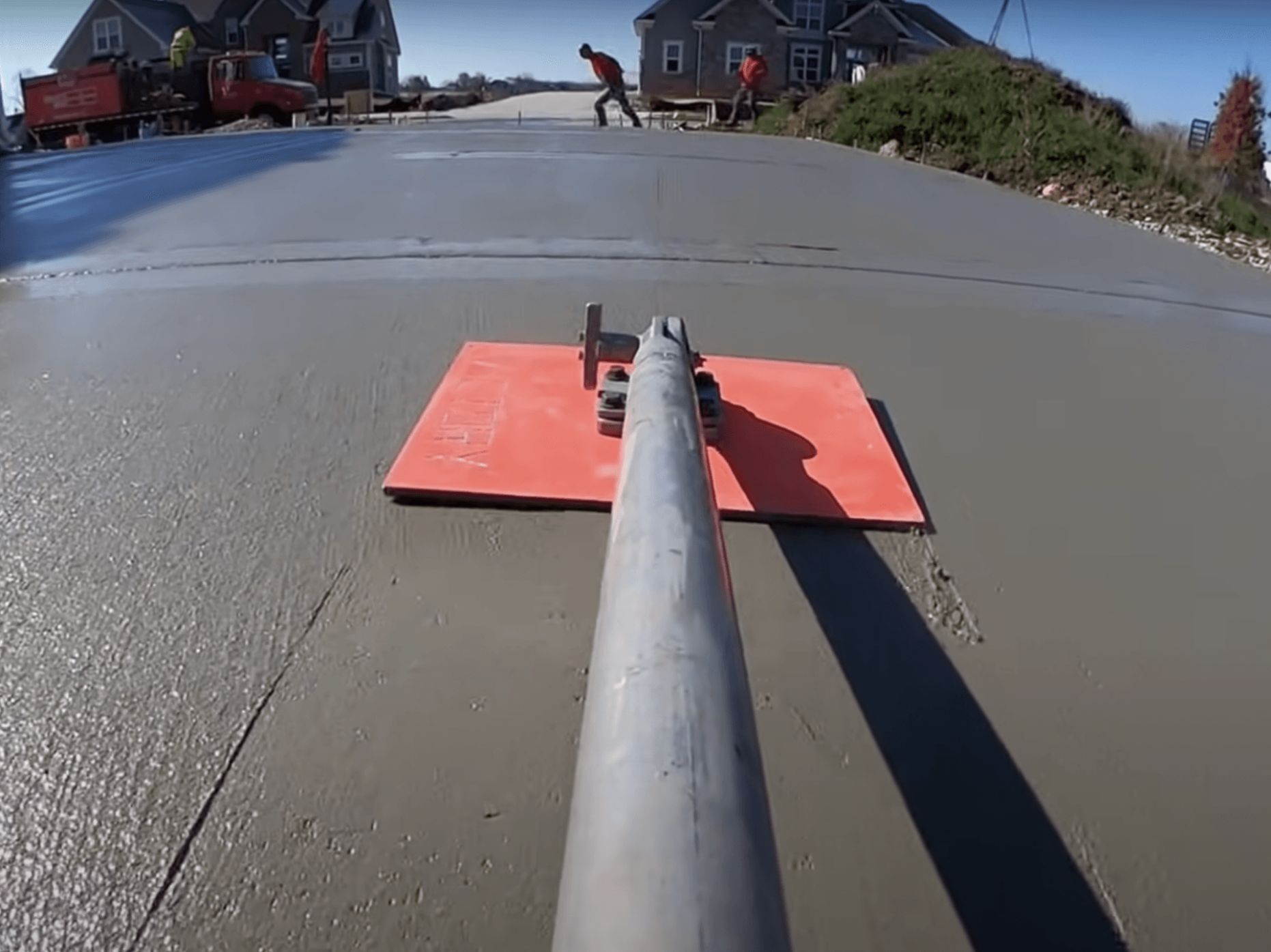
Rest the screedboard’s narrow side on top of each of the perimeter boards. You can smoothen and levelize the concrete by hand-dragging the screedboard using a backwards sawing motion. Keep repeating this step until the concrete has a smooth finish.
Keep the wood float at an angle when pushing it away. If you want to bring the float closer to you, make sure the side facing toward you is slightly raised. This will help you avoid drag marks. Next, make sweeping semicircular motions with the magnesium handfloat.
The concrete should be grooved every 4 to 6 ft in width. This will allow concrete's temperature to change, and prevent surface cracks.
Groovers may be long-handled, reachable tools for standing work or hand tools that can crouch to do close-ups. Both operate in the same way: cutting a groove through concrete. With a long-handled grinder, it is easier to make a straighter path through a larger project.
Brush the concrete with a broom to prevent slippage during wet conditions. To avoid clumping, allow concrete to set. The time it takes to set concrete will vary depending on the humidity and temperature. If there is any clumping or spotting, smoothen the section once more with the magnesium-float and wait for it to set.