contractors in tulsa ok

concrete tulsa


First, ensure that the site is suitable for concrete pouring. This involves contacting your local building department for information about permits and building setbacks. It also involves calling the local excavation company to mark the locations of pipes or wires in the ground.
Concrete pouring is not something that can be stopped or restarted easily. It's crucial to prepare the site and have all necessary tools and materials on hand before you begin a DIY concrete pour. Personal protective equipment is also important. Safety glasses, gloves, sturdy boots, long pants, and a long-sleeved shirt are essential to protect your eyes and skin from chemical burns that may result from wet concrete.
Next, you need to determine the form and size of the concrete pour. Because it is easier to work on level ground, it also reduces the amount work required to make a subbase flat and a concrete pour.
Once you have determined the location, mark the area where concrete will be poured. String and stakes can be used to lay a slab. A stake is placed at each corner. Flags can be confusing if they were used to mark wires, gas lines and sewer lines. Specific colored flags are used for different functions. To ensure that a rectangle shape is achieved, measure the diagonals.
Most situations require that some soil be removed in order to make concrete. If you want the concrete patio or driveway level with the surrounding ground, then remove enough soil to make sure the subbase of gravel is 4-8 inches deep and the concrete slab on the top is 4 inches. The depth of concrete and subbase may vary depending on the project.


No matter the reason, our Tulsa concrete experts can help. After a free foundation inspection, we will discuss your options with you before implementing concrete repair Tulsa.
T&S Premier Concrete Tulsa has a reputation for not putting band aids on serious problems. Concrete cracks can cause serious damage to your home's safety. Our team will create a solution for you that suits your specific situation.
The majority of concrete repair methods (epoxy injections, mudjacking, and so on) are temporary. Our preferred concrete repair method is replacement. This is a long-lasting solution that won't be repeated year after year, unlike some of the other common methods.

can you pour concrete in the winter

can you pour concrete in the winter


Concrete contractors first need to determine the concrete shape, size (color, finish, and depth) that will be used. These factors should all be considered before any concrete project can begin. Each option can drastically change what is required, and can have an impact on the final result.
Concrete contractors are responsible for site preparation. This involves backfilling and excavating. Contractors make sure that any rocks, trees or garbage are removed from the site. They also ensure that the ground is leveled, graded and compacted to allow it to support the building's needs for many years. The ground must be prepared to withstand the settling moisture and dirt. This can cause concrete problems which could compromise the structure of the building and the safety and security of those who will live there.

need concrete work done


Protect concrete with a rope to keep it from drying out for longer than the industry-recommended 28 days. A freshly poured slab of concrete is usually safe to walk on after a few days and it is safe to drive on it for about a week. It's best to wait until the concrete has fully cured to avoid any potential scuff marks.
You can protect the concrete's longevity after it has cured by sealing it with a concrete primer recommended by your concrete manufacturer. This concrete primer is suitable for concrete types, climate, and project details. You should wait for the sealant to dry before you walk on it. Then, wait 2 to 3 days before you drive on your newly sealed driveway.
Concrete will look great for many years if it is regularly cleaned with soapy warm water. You can also protect concrete by sealing it every five years.
You might have more questions about pouring concrete. This is often misunderstoodly called pouring cement. These are the top questions regarding pouring concrete. If you are unable to find the answer to the question below, contact the manufacturer to obtain additional information.

need concrete work done
cost to build a driveway

cost to build a driveway


You can add visual interest to your property by giving concrete surfaces the texture, patterns, or color of you choice. We offer a large selection of stamping moulds, stains, and coloring. However, if we don't have it in stock, we can get it.
Our work is guaranteed for a full year, including repairs and new construction. If we are hired to maintain your concrete, our warranty will be extended for an additional 10 years. We are licensed and fully insured to protect our customers and workers.

concrete floor contractors near me


Concrete workers need to have skills beyond what is required on the job. They need to be proficient in managing their business. This includes making confident hiring decisions, bidding, accounting and estimating.

new driveway cost


The subgrade is the soil or earth beneath the gravel layer. You can compact it by using a hand-tamper. This flat-bottomed, rectangular plate with a broom length upright handle can be used to add weight by standing or pressing down on it. The concrete will not crack if the hand tamper is used evenly across the entire area.
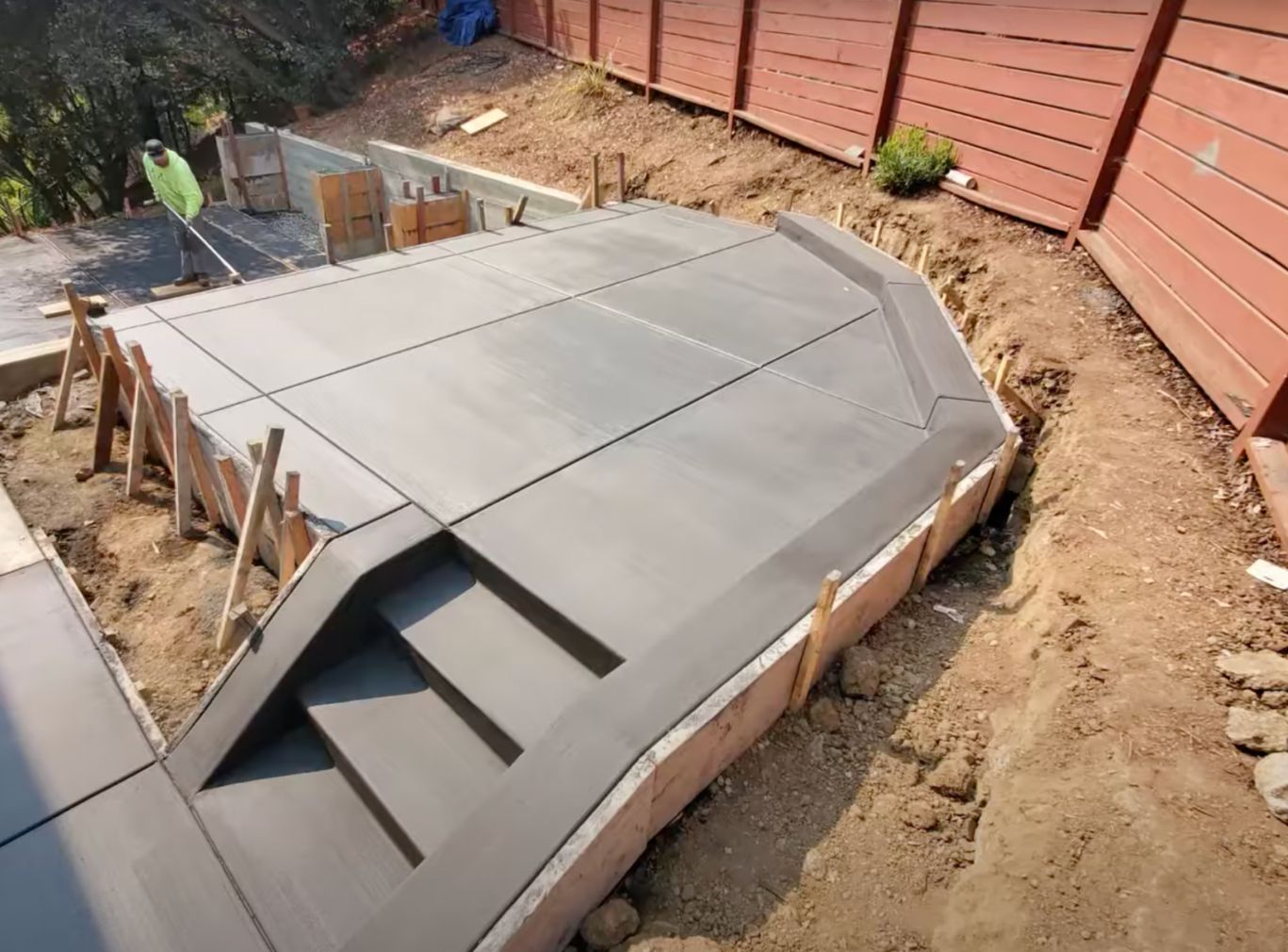
The next step in how concrete is poured is building a mold around the perimeter of your site. The concrete will then be placed in the interior of the form. Standard lumber can be used to create a linear form. Duplex nails have two heads, so it is easier to remove them after the concrete cures. If the pour contains a curving element, you can use a piece of synthetic siding or a concrete mold to transform it into an organic shape.
To ensure that the concrete form is uniform in height, you will need to level it after it has been constructed. This is vital as the quality of the preparation work will affect the level concrete when it comes to the final stages. Next, reinforce any joints using an additional board outside the form to strengthen it. Before you proceed to the next step, check that the form is level.
A gravel subbase is required, depending on the weather and soil conditions. Some areas are frostfree, while others may have soil that expands or contracts with temperature fluctuations. A layer of stones or subbase gravel is laid on top of the concrete to protect it from frost.
Open-grade stones tend to be more expensive and have better water drainage. But finer grade stone or gravel is more compact and can often provide a more stable result. Use the hand-tamper to compact gravel over the base. You can add wire mesh to strengthen the concrete by laying the sheets.
Preparing to mix the concrete requires safety glasses and gloves. A concrete mixer can rent for around $100 per day. For smaller jobs, however, a wheelbarrow with shovel, elbow grease, and a shovel will suffice. Two wheelbarrows can be used to speed up the process when you have a helping hand.
Frequently Asked Questions

While both slabs made from concrete and those made from other materials have their benefits, a slab made from concrete may be a better choice if you are looking for stability and modest growth. This is due to the fact that concrete has a longer lifespan than other materials, meaning it will likely be worth more in the future than it is today. Additionally, because concrete doesn't rot or corrode, it can withstand weather conditions that might damage other materials.

On the downside, a slab made from concrete can be expensive to construct and may not be suitable for all applications. Additionally, some people find its appearance unappealing. If these factors don't concern you then by all means go ahead and choose a slab made from concrete!

When installing a patio slab, you need to take into account several other factors, including the climate and your overall design goals. For example, if you want a deck that is accessible all year round, then it may be necessary to install an insulated slab as well. Additionally, certain types of slabs are better suited for specific conditions such as wet or dry climates.

Another important factor to consider is the substrate material that will be used. The most common substrates used in patio construction are concrete and stamped concrete decks because they're durable and resist wear and tear. However, there are also many synthetic materials available on the market that can provide similar benefits.It's important to choose one that matches your unique needs and specifications so that the finished product looks appealing and functions properly.

Slabbing is a process of installing a concrete surface that is typically used in the construction industry. It involves pouring an uniform layer of concrete over a prepared surface, and then topping it off with another layer of concrete to create a seamless finish. The advantage to slabing is that it eliminates the need for scaffolding or other supports, which can be dangerous and expensive. Additionally, it allows for quicker installation times and larger sizes than traditional methods like framing.

The biggest downside to slabbing is that it has high maintenance costs due to its reliance on strict adherence to specifications. Furthermore, if someone makes any missteps during the installation process (for example, by not following the correct procedures), there can be significant damage done to both the finished product and surrounding area. So while slabs are often considered faster and more efficient than other construction methods, they come with some hefty potential expenses down the line.

Concrete slabs are often thought to be more durable than other types of flooring because they have a higher compressive strength. This means that the slab can resist greater forces before failure occurs. In addition, concrete is also weatherproof and doesn't require any type of maintenance or repairs.

Recently, there has been an increase in the popularity of vinyl and wood flooring, but these materials tend to suffer from damage due to moisture and wear-and-tear. Concrete slabs, on the other hand, can handle both wet and dry conditions without issue.